Recommended
Is a Picture Really Worth a Thousand Words?


“A picture is worth a thousand words” is a popular saying that has outlasted time and seasons. But have you ever stopped to think for a second why visual expression could lord over oral expression? Is there a reason for this adage? Does it make sense? Well, we looked beyond the words to unravel the science behind their meaning. Read on to learn more.
Pictures Convey Emotions
Humans are visually driven than anything else. There is an intimate connection between what we see and what we feel. A single image has the power to evoke different emotions within us. It could make us happy, euphoric, excited, nostalgic, wistful, sad, eager to name but a few. One look at an image can transport us to times and seasons past. It can make us laugh, cry or wish for forgotten moments.
An image can awaken long-forgotten emotions, no matter how long the experience occurred. This is why brands and marketers capitalize on images to peak our curiosity and motivate us to act. They are so powerful that they can warn us about the future as well. Words on the other hand can barely elicit such overwhelming emotions. You could take a word with a pinch of salt, but an image will linger on your mind long after you viewed it. Ultimately, words don’t just “hit” as much as pictures do.
Headlines are Great But Pictures are Powerful
In brand marketing and advertising, compelling headlines are a must-use. But successful marketers will tell you how images produce more clicks and patronage than words. An intriguing headline can serve as bait to lure your target audience, but a single picture can convey the message better than a thousand words would. Most people don’t have time to read or skim through lines and lines of texts, some would even skip headline after headline or never read past the headline.
However, a striking picture wields the power of attraction. It can relay the message and inspire action in all but a few seconds (Something a thousand words can never do). In fact, merging words with pictures is a powerful advertising tool. This is why the vast majority of brands, websites, and e-commerce sites are dotted with attractive pictures. Plus, you would be more convinced to buy a product if you saw a beautiful picture of it, rather than by reading a thousand sweet words convincing you to buy.
Why is a Picture Worth a Thousand Words?
Science believes that images are unconsciously persuasive. They affect our perception of ourselves and our surroundings. Pictures when captured and used the right way, not only influence our mood but also our ability to take certain actions — like buy a product or go for an event (depending on the prompt). You can say a thousand words with a single picture as well as evoke a thousand emotions. Additionally, words are fleeting but an image is eternal. Words can dissolve with the air but a picture is immemorial. And oh the joy of sharing and uploading pictures on sites like iPhoto is indescribable!


Key Takeaways
- Insurance Claim HQ steps in when burst-pipe claims become complicated, and insurers drag their feet.
- Hidden water damage is often underestimated by insurers, leaving families with repair bills they cannot afford.
- The firm uses deep experience and structured advocacy to secure fair outcomes for homeowners across the country.
A burst pipe hits fast and completely disrupts a home. Water spreads through walls, beneath flooring, and into places the homeowner will not notice until mold or a musty smell appears. Repair costs climb quickly. Displacement becomes unavoidable. Most people assume their insurance will cover the damage. That assumption does not always hold up. Burst pipe claims are among the most scrutinized and disputed property damage claims in the industry.
Insurance Claim HQ, founded by attorney Galen M. Hair in Metairie, Louisiana, was built for moments like these. Since launching in 2020, the firm has become a national force for policyholders who feel ignored, underpaid, or blamed for damage they never caused. The team has recovered hundreds of millions for thousands of clients. They handle everything from fire and hurricane claims to tornado and water-damage claims. Burst pipe claims sit at the center of that work because the stakes rise quickly, and insurers often try to pay as little as possible.
When Burst Pipes Trigger Expensive Conflicts
Water damage moves through a house with speed. One line rupture can compromise drywall, insulation, cabinets, electrical systems, and flooring. These repairs cost far more than most people expect. The average water damage insurance claim in the United States exceeds $11,000. That number rises sharply when structural elements are involved. Even with that data, insurers often argue the damage is minimal or unrelated to the burst.
Some deny the claim entirely. They point to policy exclusions. They argue for long-term leakage rather than a sudden burst. They insist the homeowner failed to maintain the property. These arguments shift responsibility away from the insurer. Once that blame lands on a policyholder, the payout shrinks before repairs even begin.
Hidden moisture makes the situation harder. Water does not stay visible. It moves beneath tile, behind walls, and into insulation. When insurers rely on surface-level inspections, the more serious damage stays undocumented. Homeowners are told repairs will be minor even as the smell grows and mold begins to spread. By the time those signs appear, the insurer has already moved on from the claim or issued a settlement that falls far short of the real cost.
This is where Insurance Claim HQ steps in. They challenge the early assumptions. They demand full, fair inspections. They push for assessments that cover the entire water’s path. When the claim has already been denied, they reverse the narrative with evidence and expert analysis.
Galen describes the firm’s philosophy simply. “Going above and beyond for clients is not about checking boxes. It is about making sure people get the help they were promised when they bought that policy.” That mindset shows up in every step of the work.
The Insurer’s Playbook and How Insurance Claim HQ Responds
Insurers approach burst pipe claims strategically. They send adjusters quickly, but speed does not always lead to fairness. Some adjusters recommend quick fixes rather than full remediation. Some reject secondary damage by claiming the moisture came from humidity rather than the pipe rupture. Others stall with repeated requests for documents that do not matter. Delays help the insurer. They hurt the family living in a damaged home.
Low settlement offers arrive next. Homeowners who need repairs immediately feel pressured to accept. Many do not know their rights or understand the long-term cost of hidden damage. Insurance Claim HQ steps in early to block the pattern from continuing.
When insurers claim the homeowner caused the burst or failed to maintain it, the firm demands proof. When insurers attempt to ignore hidden moisture, the firm provides evidence that cannot be dismissed. When insurers push incomplete interpretations of policy language, the firm breaks them apart line by line.
This clarity has helped families across the Deep South and beyond recover fair compensation. It also gives homeowners confidence that someone is in their corner when the situation feels overwhelming.
Documenting Burst Pipe Damage Before It Fades
Documentation protects the policyholder. Insurance Claim HQ teaches clients to capture the scene immediately. Photos of standing water. Videos showing the timeline. Receipts for emergency mitigation. Statements from plumbers or contractors who witnessed the damage. Fire department or city response reports when relevant.
These records stop insurers from rewriting the story. They show the conditions as they were in the moment, not as they appear weeks later. They also help the firm build stronger cases quickly.
Insurance Claim HQ offers a free resource that guides homeowners through this process. The Ultimate Guide to Maximizing Your Insurance Claim is available on their website. It walks property owners through documentation, timing, and communication. It also explains common mistakes that weaken claims.
The firm represents clients nationwide. Galen is licensed in Louisiana, Florida, Massachusetts, and New York. That reach gives the firm the ability to respond in regions where burst pipe claims spike after winter storms and infrastructure failures.
Families often come to the firm after the claim has already turned into a fight. Others reach out as soon as the damage happens. In both cases, Insurance Claim HQ provides the structure and clarity people need in a chaotic moment.
For guidance, support, and legal representation after burst pipe damage, visit insuranceclaimhq.com to protect your case from the start.
About Insurance Claim HQ
Insurance Claim HQ is a premier property casualty insurance law firm powered by Hair Shunnarah Trial Attorneys and headquartered in Metairie, Louisiana. With hundreds of millions recovered for thousands of clients, the firm brings years of legal experience and unmatched insight into how insurers operate. Discover how they fight for policyholders at www.insuranceclaimhq.com.

Nutrition advice can feel overwhelming for anyone, especially for people just starting their fitness journey. Calories, meal plans, trends, and conflicting rules compete for attention, leaving beginners unsure where to start. Fitness expert Peter Embiricos approaches nutrition by stripping it back to fundamentals. Rather than chasing diets or rigid rules, the focus shifts to understanding how food works in the body. That is where macros come in. Macros provide a simple framework that explains how different foods support energy, recovery, and overall health. When beginners understand this foundation, nutrition feels more structured and manageable.
Here is a beginner-friendly breakdown of what macros are and why they matter.
What Are Macros?
Macros, short for macronutrients, refer to the three primary nutrients the body needs in larger amounts: protein, carbohydrates, and fats. Each macro plays a distinct role in supporting daily function, physical performance, and long-term health. Food choices always contain some combination of these three nutrients.
Why Do Macros Matter For People Starting Their Fitness Journey?
Macros determine how the body uses food for energy, muscle repair, hormone production, and metabolic health. Understanding macros shifts the focus away from labeling foods as good or bad and toward balance, portion awareness, and consistency. This framework supports sustainable eating habits rather than short-term dieting. As Peter Embiricos explains, “Macros matter because they explain what food actually does in the body. When people understand that, nutrition stops feeling like a set of rules and starts making sense.”
Protein, Carbohydrates, and Fats Explained Simply
Protein supports muscle repair, strength development, and satiety. Adequate protein intake helps preserve lean muscle and promotes recovery from exercise and daily activity. Common sources include meat, fish, eggs, dairy, legumes, and tofu.
Carbohydrates provide the body’s primary source of energy. Carbs support training performance, brain function, and daily movement. Whole grains, fruits, vegetables, and legumes supply carbohydrates along with fiber and micronutrients.
Fats support hormone production, nutrient absorption, and overall cellular health. Healthy fat sources include olive oil, nuts, seeds, avocados, and fatty fish. Fat also contributes to fullness and meal satisfaction.
How Macros Fit Into Everyday Nutrition
Macros offer structure without strict rules. Meals that include all three macronutrients tend to support steady energy levels and better appetite control. This balance reduces the urge to overcorrect with restriction or overeating. Beginners benefit from focusing on food quality and portion awareness rather than chasing perfect ratios. Consistency across days matters more than precision at every meal. Over time, understanding macros builds confidence and flexibility around food choices.
A Practical Starting Point for Beginners
Tracking macros works for some people, though awareness alone creates meaningful change for many beginners. Learning which foods contain protein, carbohydrates, and fats builds nutritional literacy and reduces guesswork around eating. That understanding supports better decisions at restaurants, grocery stores, and during busy weeks, without relying on strict tracking or rigid plans. Over time, macros function less as a set of numbers and more as a reference point for balance and consistency. When nutrition supports daily life rather than dominating it, habits become easier to maintain. Macros provide structure without restriction, helping beginners develop an approach to eating that feels realistic, flexible, and sustainable.
Final Takeaways on Macros
Macros offer a practical way to understand nutrition without turning food into a set of rules. By focusing on protein, carbohydrates, and fats, beginners gain a clearer picture of how meals support energy, recovery, and overall health. This framework encourages balance, flexibility, and consistency rather than perfection. When macros serve as a guide instead of a target, nutrition becomes easier to navigate and more sustainable over time.
Who Is Peter Embiricos?
Peter Embiricos is a personal trainer based in San Diego. He’s known for his practical, personalized approach to training and nutrition education. He focuses on helping individuals understand foundational concepts that support long-term health, strength, and consistency. Through clear guidance and sustainable strategies, Peter helps people build confidence in their fitness and nutrition decisions.
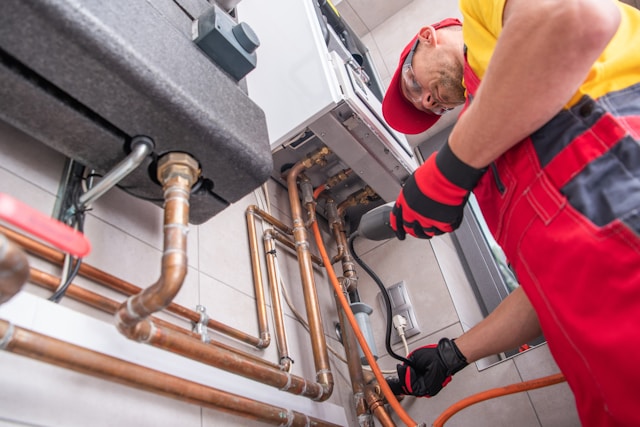
Leaks are easy to miss when they’re small. A slow drip behind a wall can lead to rot, mold, damaged insulation, flooring, and unexpected repair bills. Plumbing is also made from a wide variety of materials and fixtures, so leaks can hide in dozens of places. In the past, detecting them required tearing into walls, pulling up tiles, or making educated guesses. Leak detection technology has since given homeowners and technicians better ways to solve problems before they grow into expensive disasters.
Leaks always start with a point of failure. It may be a loose fitting, a corroded valve, a pinhole in a copper line, or a crack in a drain. Pressure changes, temperature fluctuations, and vibrations all take a toll on plumbing over time. Once the water starts to escape, it can spread in many directions along unpredictable pathways. The water can soak into timber framing, seep along plumbing chases, or collect in low areas far from the leak source. These paths make visual inspection only marginally useful except in the most obvious cases. Most leaks call for a more systematic approach built around sensing technology.
Acoustic leak detection is one of the most common of these methods. Escaping pressurized water produces a distinct sound signature when it exits a pipe. The noise is often too faint to hear with the human ear. Pressure leaks behind walls, under concrete, or underground can make them even harder to pinpoint. Acoustic sensors designed for this purpose can amplify the sound. Technicians can use handheld acoustic detectors or ground microphones to listen through concrete, floors, and walls. A leak creates a unique acoustic pattern that trained listeners can recognize. The method works well with pressurized lines of all kinds, including copper, PEX, and steel. The method is not as useful on low pressure systems, and is less effective for drains which have different acoustic signatures.
Thermal imaging can provide another important data point. Escaping water changes the temperature of the material around it. Hot water leaks will produce warm patches or lines on walls and floors. Cold water leaks create cool patches. Infrared cameras can detect these changes even when they’re not visible to the naked eye. The tool can help narrow down the leak location and help confirm that the moisture is still active. The same imaging also reveals hidden heating or cooling lines. It is critical to know their position before starting repair work to avoid accidentally damaging them. Thermal imaging tools cannot see through solid objects, but they can still show temperature patterns.
Moisture meters are another tool for assessing water levels in building materials that’s why it is important to speak to trusted Mister Plumber service about it. They can help decide whether a wet spot on a wall or floor is from surface moisture or a deeper leak. Pin style meters have metal probes that contact the material directly. Pinless meters can scan a wider area without actually penetrating the surface. By scanning walls and floors, technicians can map moisture levels. The path the water takes as it moves through the material often creates a path or pattern. This helps technicians judge the size of the leak, how long it’s been present, and whether structural components are threatened. Moisture meters are especially helpful after storms, floods, or during appliance failures.
Tracer gas testing is one of the most accurate and precise methods for pinpointing difficult leaks. A non-toxic gas is introduced into the pipe. A common tracer is a combination of hydrogen and nitrogen. Because the molecules are smaller, the gas can escape from the pipe through very small holes or cracks more easily than liquid water. Sensitive detectors are used to scan for the escaping gas. When the detector registers a spike, it is at the leak position. The method works well on buried lines, concrete slabs, and other situations where water flow is too slow to make strong acoustic signals.
Pressure testing is a simple but powerful tool for determining whether a system has a leak. The pipe is sealed, and then pressurized with air or water. If the pressure drops after some time, it means there is a leak somewhere in the line. The test does not indicate the location of the leak, but it can indicate whether additional diagnostics are needed. Pressure tests are common during renovations, new builds, and repair jobs where the integrity of a line must be known before walls are closed in or floors are finished.
Electronic leak detection systems provide another means of finding hidden leaks. Homeowners may use these systems by installing moisture sensors under sinks, near water heaters, around washing machines, or in crawl spaces. If the sensor detects water, it can trigger an alert or activate shutoff valves. Smart home versions connect to apps on mobile phones to instantly alert homeowners. Some systems also monitor total water usage and will flag unusual flow patterns. If the home’s flow should remain constant when all fixtures are turned off, the system can assume a leak and send an alert. Leak sensor systems catch problems long before they create major damage.
Slab leaks are among the most difficult for homeowners to detect on their own. Many homes built on concrete slabs have water lines running underneath. A leak in one of those lines can travel under the slab before surfacing and showing signs of leakage. Acoustic tools, thermal imaging, and tracer gas testing are often used together to pinpoint the position. Without these tools, the homeowner may need to break open large sections of flooring which can be costly and stressful.
Leaks in drains follow different patterns than those in water lines. These leaks are more common in showers, tubs, or kitchen sinks. They do not typically operate under constant pressure, which means they require different methods to detect. Dye tests are especially effective in these cases. A small amount of colored dye is added to the fixture, and then the surrounding areas are checked for the appearance of colored moisture. Cameras inserted into drain lines can also help identify cracks, loose joints, or other blockages that may cause leaks.
The best overall leak detection approach layers these tools with experienced technicians. No single tool or method is appropriate for all situations. Acoustic detection works best with pressurized lines, while thermal imaging makes temperature changes stand out. Moisture meters can confirm the extent to which water has spread. Tracer gas testing can locate stubborn leaks that do not register through other methods. The layering of multiple techniques builds a comprehensive picture of what is happening inside a wall or below a floor.
Preventative measures also help to reduce the odds of leaks developing in the first place. Regular pressure checks help protect fittings, valves, and appliances. Flushing water heaters and removing sediment prevents tank stress. Inspecting exposed pipes for signs of corrosion, swelling, or discoloration can catch problems early. Replacing worn angle stops, hoses, and supply lines before they break can save time and money. Many leaks start at simple connections that homeowners can check without special tools.
Water chemistry also plays a role in leak formation. Chlorine damage may pit copper lines. Hard water causes minerals to build up, which stresses fittings. Galvanized steel corrodes from the inside out. All plumbing materials react differently to the local water supply conditions. Periodic water testing can help identify whether treatment systems, softeners, or corrosion inhibitors are needed.
Environmental factors play a role too. Soil shifts can stress underground pipes. Rapid temperature changes cause expansion and contraction. Vibrations from pumps or appliances loosen fittings over time. A home is not a static environment. Its plumbing system faces constant movement and stress, which makes monitoring important.
Leak detection is not only about finding water, but also about protecting the structure, maintaining healthy indoor air quality, and preserving the value of the home. With modern technology, leaks that once required ripping open walls can now be located with accuracy. This reduces repair costs, prevents long term damage, and gives homeowners peace of mind that their plumbing system is stable. When a problem does appear, a combination of technology and skilled analysis helps ensure that the problem is found quickly and fixed correctly.


Ways to generate multiple sources of income

Top 4 smart TVs available now

3 effective leadership styles used in contemporary businesses

4 amazing, world-changing technological innovations from the 2000s

Money saving habits that you can implement into your life

4 celebrities who have their own lifestyle blog

The pros and cons of President Donald Trump’s leadership style
Ways to generate multiple sources of income
4 celebrities who have their own lifestyle blog

Rags to riches: entrepreneurs who came from nothing

Top 3 ugliest celebrity divorces and splits

Top # US military leaders of all time
The pros and cons of President Donald Trump’s leadership style
Ways to generate multiple sources of income
4 celebrities who have their own lifestyle blog
Rags to riches: entrepreneurs who came from nothing
Top 3 ugliest celebrity divorces and splits
Top # US military leaders of all time
-
 Leadership3 days ago
The pros and cons of President Donald Trump’s leadership style
-
 Money3 hours ago
Ways to generate multiple sources of income
-
 Lifestyle1 day ago
4 celebrities who have their own lifestyle blog
-
 Entrepreneurs2 days ago
Rags to riches: entrepreneurs who came from nothing
-
 Entertainment4 days ago
Top 3 ugliest celebrity divorces and splits
-
 Leadership4 days ago
Top # US military leaders of all time
-

 Entrepreneurs3 days ago
The crazy entrepreneurial stories that you’ll find inspiring and wacky
-

 Entrepreneurs2 days ago
3 things you shouldn’t do as an entrepreneur